Two of the world's most celebrated tropical destinations go head-to-head. Palawan offers wild lagoons and world-class diving at a fraction of Maldives prices — but the Maldives delivers overwater luxury that Palawan simply cannot match. We break down every factor.
Palawan vs Maldives: The Ultimate Luxury Travel Showdown
Both destinations appear on every "world's best beaches" list. Both attract honeymooners, divers, and luxury travellers willing to pay premium prices for extraordinary experiences. But Palawan and the Maldives are fundamentally different places — and choosing between them requires understanding not just where the beaches are prettier, but what kind of traveller you are and what you actually want from a tropical luxury escape.
This guide compares every major factor: beaches, diving, accommodation, cost, accessibility, and the intangible qualities that make each destination irreplaceable.
At a Glance
| Factor | Palawan (El Nido / Coron) | Maldives |
|---|---|---|
| Country | Philippines | Republic of Maldives |
| Location | South China Sea | Indian Ocean |
| Signature experience | Lagoon exploration, island hopping | Overwater villa, reef snorkelling |
| Beaches | Dramatic karst + white sand | White sand + turquoise lagoon |
| Diving | World-class biodiversity | World-class coral, pelagic species |
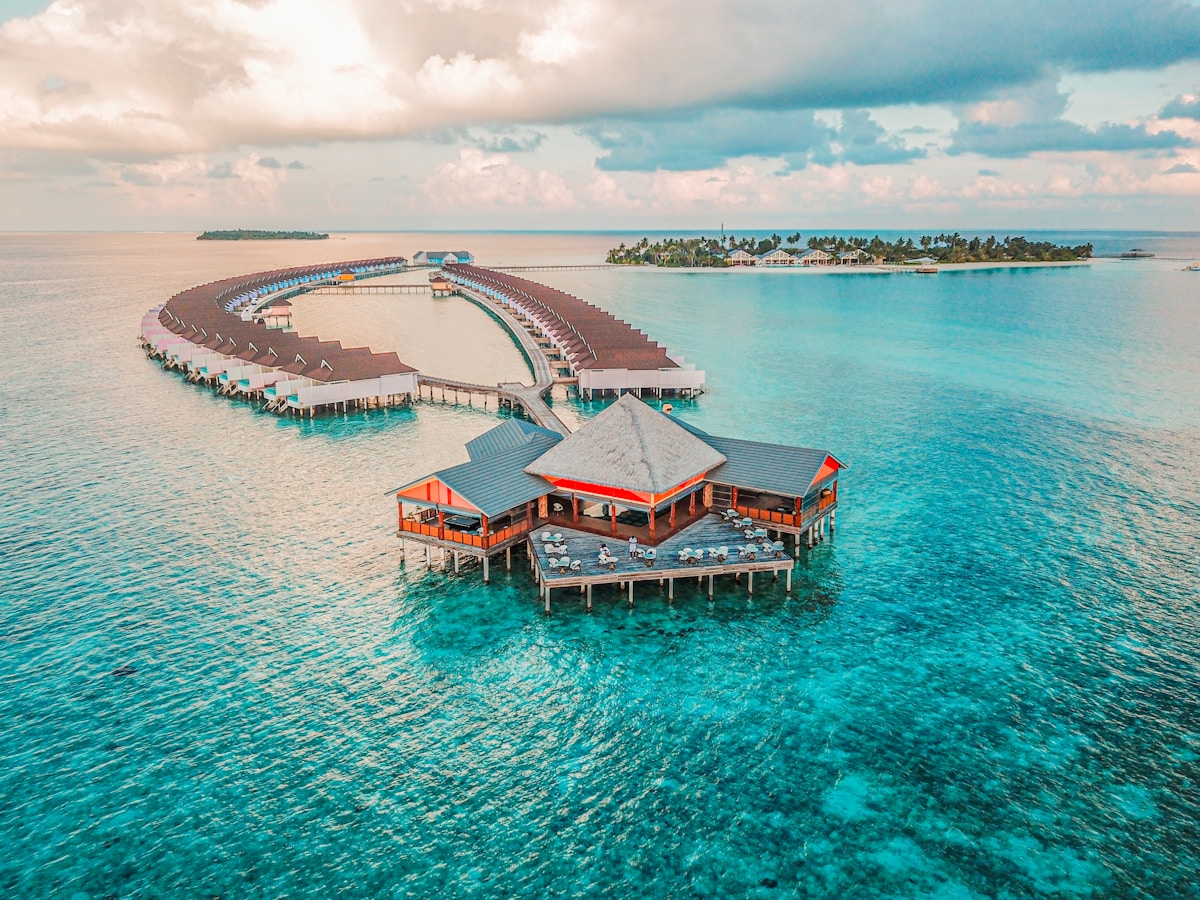
| Overwater villas | No | Yes — the global benchmark |
| Budget/night (luxury) | $150–$600 | $700–$5,000+ |
| Crowds | Moderate | Low (resort islands are private) |
| Getting there | Domestic connection required | Seaplane or speedboat from Malé |
| Best season | November–May | November–April (dry), May–Oct (manta/whale shark) |
| Cultural experience | Filipino warmth and culture | Maldivian and resort-culture only |
The Core Difference
Palawan is a destination of geological drama — ancient limestone karsts rising from jade-green lagoons, hidden beaches accessible only by bangka boat, and some of the world's most diverse marine ecosystems in the Tubbataha Reef and Coron's sunken WWII fleet. It is a destination for *explorers*.
The Maldives is a destination of environmental perfection — 1,200 coral islands scattered across 90,000 square kilometres of Indian Ocean, each private resort occupying its own atoll, with water so still and clear it appears computer-generated. It is a destination for *those who want to stop and feel the world slow down*.
You cannot replicate the Maldives experience in Palawan. You cannot replicate the Palawan experience in the Maldives. The question is which matters more to you.
Beaches
Palawan
El Nido's beaches are among the world's most photographed for good reason. Nacpan Beach — a 3km arc of white sand backed by coconut palms and rolling hills — consistently ranks among Asia's finest. Las Cabañas, Lio Beach, and the dozens of hidden coves accessible only by boat in the Bacuit Archipelago deliver the kind of untouched beach experience that requires real effort to reach and rewards generously.
Coron adds a different dimension: Kayangan Lake (consistently rated the Philippines' most beautiful lake), Twin Lagoon, and the shipwreck-studded bay that makes it one of the world's top dive destinations.
The drama of Palawan's beaches comes from their *context* — the limestone karsts, the jungle backdrop, the sense that you've arrived somewhere genuinely remote.
Maldives
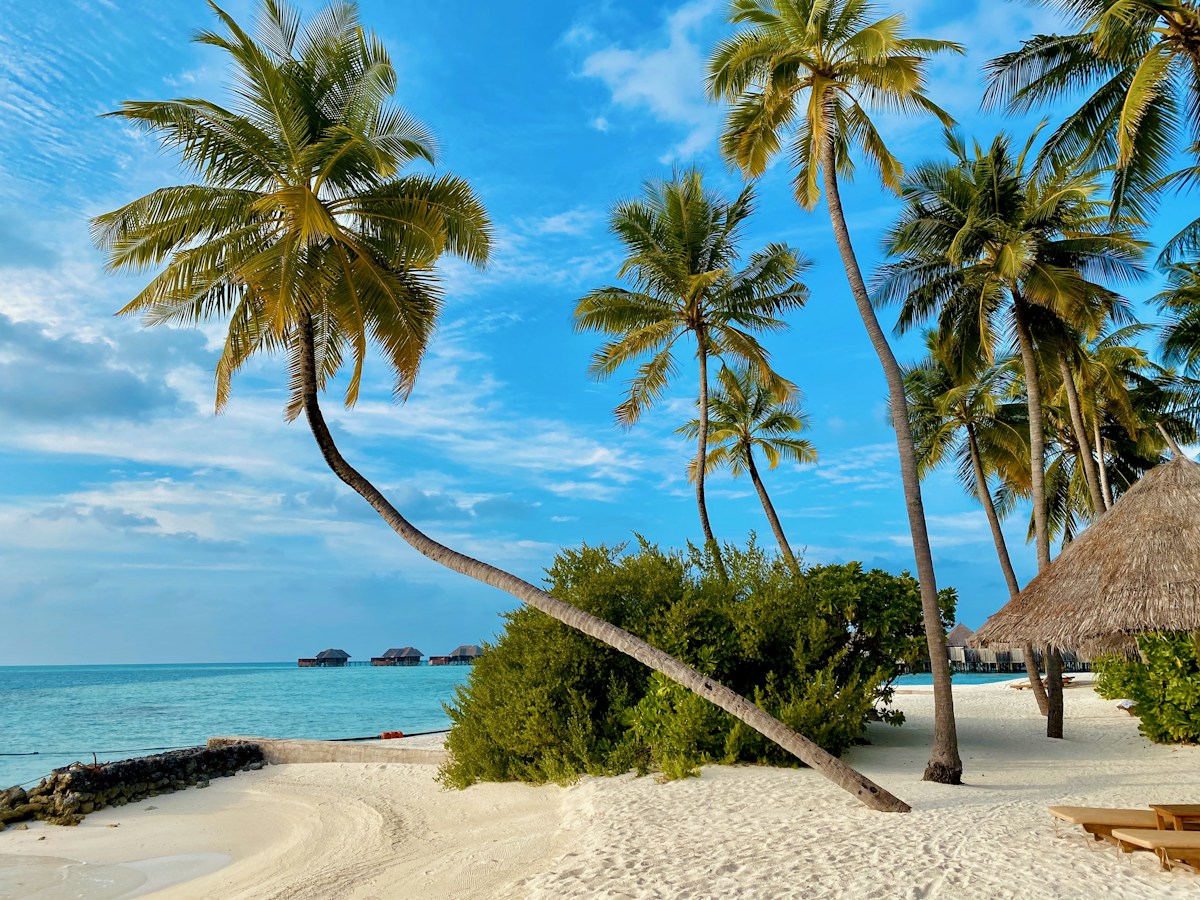
Maldivian beaches are the platonic ideal of tropical sand — powdery, blinding white, curving around the edge of coral atolls just centimetres above sea level. The shallow lagoon water surrounding each island is an impossible shade of turquoise that shifts through aquamarine and teal depending on the depth and the angle of light.
The experience differs from Palawan in one key respect: Maldivian beaches are the edge of the resort. You walk out of your overwater villa, down the jetty, and drop into the lagoon. The beach is where you sit between snorkels. The entire island — in many cases, you can walk around it in 20 minutes — belongs to the resort guests.
Verdict: Different rather than better or worse. Palawan for dramatic natural scenery and the thrill of exploration. Maldives for perfect environmental serenity and the sensation of having the ocean to yourself.
Diving & Snorkelling
Palawan
Palawan's marine biodiversity is staggering. The Tubbataha Reef National Park — accessible only by liveaboard from Puerto Princesa — is consistently ranked among the world's top five dive sites. The UNESCO-listed park contains over 600 fish species, 360 coral species, and critical populations of sharks, manta rays, sea turtles, and dolphins.
El Nido's local dive sites (Dilumacad Wall, Miniloc Drop-Off, Tres Marias) deliver excellent reef diving with rich fish life and good visibility in the dry season. Coron's wrecks — the sunken Japanese WWII fleet in Coron Bay — are among the finest wreck dives on the planet, with penetration diving through engine rooms, cargo holds, and fighter cockpits covered in coral growth.
Maldives
The Maldives offers a different category of diving excellence: pelagic species at scale. The atoll channel systems act as cleaning stations and feeding grounds that concentrate large animals — whale sharks, hammerhead sharks, manta rays in extraordinary numbers (Hanifaru Bay in Baa Atoll sees hundreds of mantas feeding simultaneously during the wet season), reef sharks, and eagle rays.
House reef diving is a Maldivian speciality: walk from your overwater villa, step off the jetty, and find pristine coral at 5–15m depth with turtles and reef fish. No boat required. This accessibility distinguishes the Maldives for casual snorkellers who want extraordinary underwater experiences without dive planning.
Verdict: The Maldives edges ahead for accessible, large-animal encounters and house reef quality. Palawan wins for wreck diving (Coron), overall biodiversity, and remote reef systems (Tubbataha). Serious divers should attempt both in a lifetime.
Accommodation
Palawan
El Nido's accommodation ranges from simple fan-cooled guesthouses to genuinely world-class eco-resorts on private islands. The El Nido Resorts portfolio — Miniloc, Lagen, Pangulasian, and Apulit — offers private island stays in protected forest reserves with exceptional snorkelling, fine dining, and service that matches international luxury standards. Rates range from $200–$600/night.
Mid-range boutique resorts (El Nido Cove, Cauayan Private Island, Atmosphere Resorts in southern Palawan) deliver excellent quality at $150–$400/night. The gap between the budget guesthouses in El Nido town and the private island resorts is considerable — choose your tier carefully.
Coron has a slightly less developed luxury tier but strong mid-range options with direct bay or lagoon access.
Maldives
The Maldives invented the overwater bungalow. Every significant global resort brand has at least one Maldivian property, and the engineering of the overwater villa — wooden jetty, glass-floor deck, direct ocean access, infinity-edge bathtub with sea view — has reached an art form across five decades of refinement.
Gili Lankanfushi's barefoot luxury, Soneva Jani's retractable-roof villas, Four Seasons Voavah's private island exclusivity, and COMO Cocoa Island's dhoni-inspired architecture represent different visions of the same extraordinary idea: your room is above the ocean.
The minimum meaningful luxury entry point in the Maldives is approximately $700–$900/night for an overwater villa at a quality property. At the ultra-luxury end, private island hire at Waldorf Astoria Ithaafushi starts at $35,000/night.
Verdict: Maldives wins emphatically for accommodation concept and variety. Overwater villas are the Maldives' defining contribution to global luxury travel. Palawan's private island resorts are excellent but cannot replicate the overwater experience.
Cost Comparison
| Category | Palawan | Maldives |
|---|---|---|
| Budget accommodation | $15–$40/night | $150–$300/night (budget atolls) |
| Mid-range resort | $100–$250/night | $500–$800/night |
| Luxury resort | $250–$600/night | $800–$2,500/night |
| Ultra-luxury | $600–$1,200/night | $2,500–$35,000/night |
| Local meal | $3–$8 | $30–$60 (resort-only dining) |
| Island hopping tour | $15–$35 (joiner) | $100–$300 (resort excursion) |
| Diving (2 tanks) | $60–$90 | $100–$160 |
| Airport transfer | $10–$30 | $150–$600 (seaplane) |
The cost gap is substantial and structural. The Maldives is expensive at every level because all supplies (food, water, fuel, materials) must be imported by boat or plane to each resort island. Palawan's costs reflect a developing-world economy with good local food supply.
Verdict: Palawan wins decisively on value. A luxury experience in Palawan costs 40–60% of an equivalent stay in the Maldives. For extended trips (2+ weeks), this difference is significant.
Accessibility
Palawan
Getting to El Nido requires flying into Manila (or sometimes Cebu), then catching a domestic connection. AirSWIFT operates small aircraft directly to El Nido Airport (ENI) from Manila and Cebu — a 1-hour flight, but departure times are limited and weather cancellations are more common than on major routes. Alternatively, fly to Puerto Princesa (PPS) and take a 5-6 hour van transfer north.
Factor in at least one buffer day in either direction. Palawan rewards those who plan and penalises those who don't.
Maldives
Malé Velana International Airport (MLE) receives direct flights from Singapore, Dubai, Doha, Colombo, Kuala Lumpur, Mumbai, and multiple European cities. From Malé, speedboats reach nearby atolls in 20–60 minutes; seaplanes reach more remote atolls in 20–45 minutes (seaplane transfers operate only in daylight hours and cost $150–$600 each way depending on distance).
The Maldives is easier to reach internationally than Palawan, but the final transfer to the resort island adds cost and time.
Verdict: Roughly equal complexity, different friction points. Maldives has better international connections; Palawan's domestic leg is less reliable. Build buffer time into both.
Cultural Experience
Palawan
The Philippines has a warm, English-speaking culture with genuine local hospitality. El Nido town — with its night market, seafood restaurants, local festivals, and population of approximately 40,000 — offers genuine cultural immersion alongside the natural attractions. You interact with local people, eat local food, hear local music, and encounter Filipino daily life.
Coron's indigenous Tagbanwa people have traditional territories across the archipelago, and responsible tourism operators offer respectful cultural encounters.
Maldives
The Maldives is almost entirely resort-culture. Each resort island is self-contained, staffed by a mix of Maldivian and international employees, and the "Maldivian" experience is largely curated for tourist consumption. The inhabited islands (accessible by speedboat from resorts) offer glimpses of local Maldivian life — fishing communities, mosques, local cafés — but this is not the primary draw.
Verdict: Palawan wins clearly for cultural experience and authentic local interaction.
Who Should Choose Palawan?
- Adventure travellers who want active exploration: island hopping, kayaking lagoons, jungle trekking, world-class wreck diving
- Value-conscious luxury seekers who want private island quality at 40–60% of Maldives prices
- Divers targeting the Tubbataha Reef, Coron wrecks, or exceptional reef biodiversity
- Couples who want romance AND genuine discovery — not just a beautiful backdrop
- First-time Southeast Asia visitors combining with Manila, Cebu, or other Philippines destinations
- Those who dislike feeling "trapped" on a tiny resort island — Palawan has towns, night markets, and genuine local life
Who Should Choose the Maldives?
- Honeymooners and anniversary travellers who want the definitive "once in a decade" luxury experience
- Those for whom overwater villas are a bucket-list priority — there is simply no alternative
- Snorkellers who want house reef access from their room without boat logistics
- Travellers with limited time who want maximum relaxation with zero planning friction once they arrive
- Those who value complete privacy and seclusion — on a private resort island, there is nowhere more isolated
- Luxury travellers who have already done Southeast Asian beaches and want a different ocean entirely
Can You Do Both?
Yes — and many serious luxury travellers eventually do both. A sensible combined itinerary:
Option A — Philippines First:
5–7 days El Nido → 3 days Coron → fly Manila → connect to Malé → 5–7 days Maldives. Allow 18–20 days total.
Option B — Maldives Standalone + Palawan Standalone:
Treat them as separate trips in consecutive years. Each deserves its own full focus — rushing between them diminishes both.
The contrast between the two destinations — Philippines energy and exploration vs. Maldivian stillness and perfection — is part of what makes experiencing both so satisfying.
FAQ
Is Palawan or the Maldives more expensive?
The Maldives is substantially more expensive at every tier. Expect to spend 2–3x more per day in the Maldives than in Palawan for equivalent luxury. A mid-range resort in Palawan costs $150–$250/night; the Maldives equivalent is $600–$900/night. The gap is widest at the ultra-luxury end.
Which has better beaches — Palawan or the Maldives?
Both are extraordinary, but differently. Palawan's beaches are dramatic and context-rich — the limestone karsts and jungle backdrop create stunning scenery. Maldivian beaches are environmentally perfect — impossibly white sand, perfectly calm lagoons. Palawan is more photogenic; the Maldives is more serene.
Which is better for diving — Palawan or the Maldives?
Palawan (particularly Coron for wrecks and Tubbataha by liveaboard) has greater biodiversity and the world's best wreck diving. The Maldives offers more accessible diving (house reefs), better large animal encounters (whale sharks, mantas), and more consistent visibility across atoll channel sites. Serious divers should prioritise Tubbataha and Coron in Palawan; snorkellers and casual divers will find the Maldives more immediately rewarding.
Is Palawan safe to visit?
Palawan is generally safe for tourists. El Nido and Coron are well-established tourism destinations with good infrastructure and low crime. Standard Philippines travel precautions apply — secure valuables, use reputable transport operators, and check government travel advisories for southern Philippines (Palawan island itself is not affected by security concerns that affect Mindanao).
Which destination is better for a honeymoon?
Both are exceptional honeymoon destinations, but they deliver different experiences. The Maldives offers the ultimate in romantic seclusion — overwater villas, private beaches, and resort islands that feel designed for couples. Palawan delivers romance through discovery — hidden lagoons, private island dinners, and the thrill of exploring somewhere genuinely wild together. If the overwater villa is a must-have, the Maldives is the answer. If you want adventure alongside romance, Palawan wins.
Plan your Palawan or Maldives escape with real-time resort pricing through our Booking.com and Agoda affiliate partners and Maldives region page — compare availability, packages, and best rates across both destinations.
Filed under: