Maldives 2026: Budget Luxury vs Ultra-Luxury — Which Resort Tier is Right for You?
The Maldives spans from USD 400/night "affordable luxury" to USD 5,000+/night ultra-private estates. Here's an honest comparison of what each tier delivers — and how to get the best value in 2026.
The Maldives is not a single luxury tier — it is a spectrum stretching from “accessible luxury” (overwater villa, house reef, all-inclusive at USD 400–700/night) through “established five-star” (USD 700–1,500/night) to “ultra-luxury” (USD 1,500–5,000+/night). The difference between these tiers is real and significant; understanding it before booking prevents the common disappointment of paying premium prices for a mid-tier experience.
The Maldives Resort Selection Problem
The Maldives has over 160 luxury resort islands — each is a single island, entirely occupied by one resort, accessible only by seaplane or speedboat from Malé. The isolation means that once you’re committed to a resort, you’re committed to its standard, its food, its service culture, and its beach and reef quality for the entire stay. A poor resort choice in the Maldives has no easy fix.
The most common mistakes:
- Booking by price alone without understanding what drives the price difference
- Not checking the house reef quality (some resorts have dead or degraded reefs)
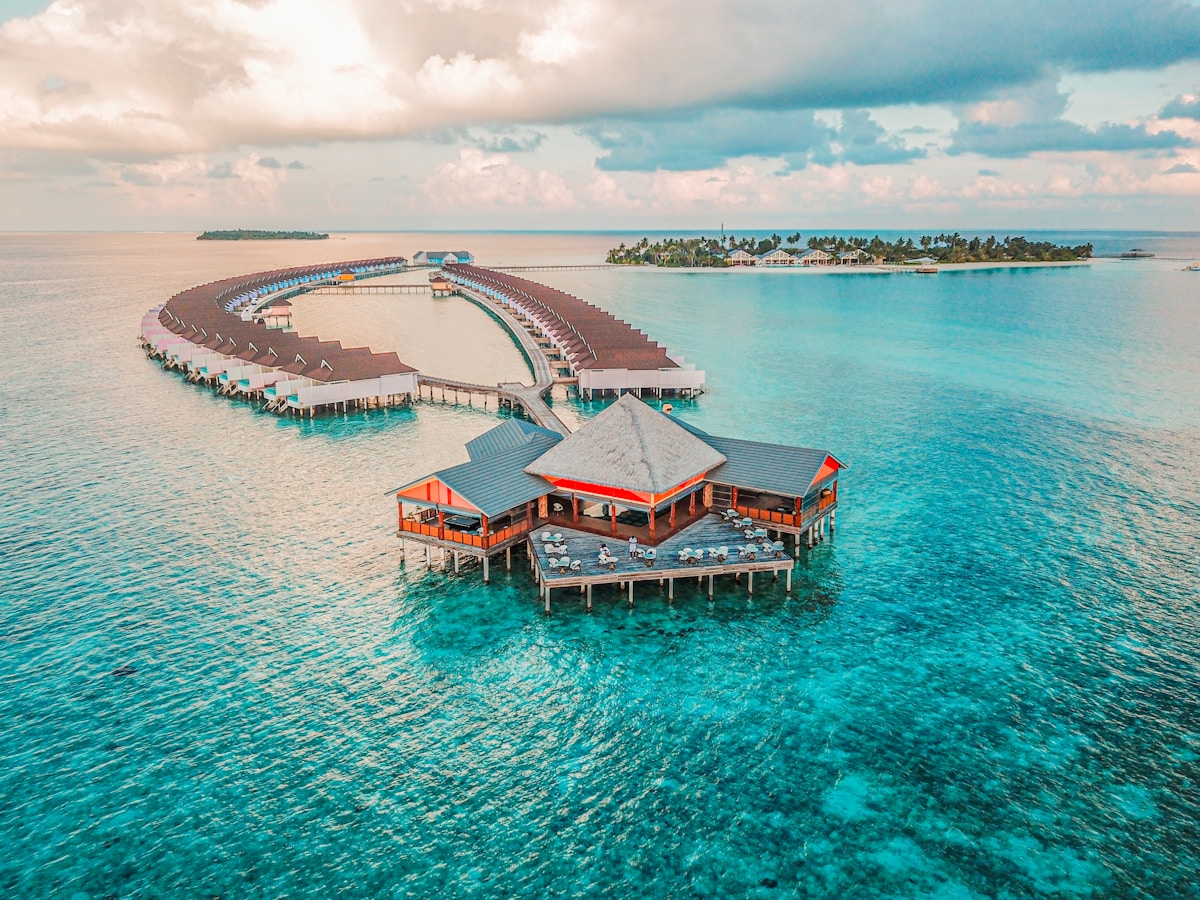
- Booking “overwater villa” without checking if it’s genuinely overwater or on the lagoon’s edge
- Underestimating add-on costs (premium activities, wine, spa) at budget-luxury properties
Tier 1: Budget Luxury (USD 350–600/night)
What you get: A genuine overwater villa, private pool or bathtub, air conditioning, breakfast included (some all-inclusive). Typically on an atoll further from Malé (speedboat transfer rather than seaplane). House reef may be average.
What you don’t get: Premium dining variety, high staff-to-guest ratio, pristine coral coverage, or the intimacy of smaller properties.
Best properties at this tier:
Kandima Maldives (Dhaalu Atoll)
A 5-star resort positioning as “lifestyle” rather than “romance-focused” — 264 villas, multiple restaurants, tennis courts, and an aqua park. Better for active couples and families than pure honeymoon retreats. The scale creates a resort-town atmosphere rather than a private island feeling.
Rate: USD 350–700/night
Sun Siyam Olhuveli (South Malé Atoll)
A popular entry-level luxury choice — large overwater villa footprint, speedboat transfer (30 minutes from Malé), coral house reef. The all-inclusive package is genuinely comprehensive at this price tier.
Rate: USD 380–650/night
Tier 1 honest assessment: Delivers the Maldives experience — overwater villa, tropical setting, warm water, snorkelling. Does not deliver the pristine natural environment, exceptional service, or gastronomic quality of higher tiers. For travellers whose priority is the overwater villa photograph on a constrained budget, this tier is rational.
Tier 2: Established Five-Star (USD 600–1,200/night)
What you get: Smaller resort (50–80 villas), significantly better house reef quality, more attentive service, better dining variety, seaplane transfer (the most scenic Maldives arrival), stronger marine conservation programs.
Best properties at this tier:
COMO Cocoa Island (South Malé Atoll)
33 over-lagoon dhoni suites — traditional Maldivian wooden boat design converted to accommodation — with exceptional COMO cuisine (the brand’s food standard is among the Maldives’ finest) and a house reef known for resident nurse sharks and sea turtles.
Standout: COMO’s wellness philosophy (COMO Shambhala) is genuinely integrated rather than superficially added — the spa program, the food menu’s nutritional architecture, and the morning yoga schedule are coherent.
Rate: USD 650–1,400/night
One&Only Reethi Rah (North Malé Atoll)
The longest beach frontage of any Maldives resort (3.2km); 130 villas — large for a premium property but the estate is big enough that density is never felt. The house reef quality is excellent; the sunset and sunrise beach positions are the resort’s most distinctive feature.
Standout: The villa positions are some of the most photogenic in the Maldives — the beach villas have a 180-degree ocean view with no other structures visible. The Reethi Beach restaurant (beachfront dining at sunset) is among the Maldives’ best settings.
Rate: USD 750–2,500/night
Gili Lankanfushi (North Malé Atoll)
“No news, no shoes” — a 45-villa property with a philosophy of genuine simplicity at high standard. The house reef is among the Maldives’ most biodiverse; the resident marine biologist runs coral restoration programs that guests can participate in. The “villa host” service model (each villa has a dedicated host, available 24 hours) is more attentive than the standard butler model.
Rate: USD 1,200–4,000/night
Tier 3: Ultra-Luxury (USD 1,500–5,000+/night)
What you get: The Maldives’ finest marine environments, smallest guest counts (15–30 villas maximum), highest staff-to-guest ratios, genuinely exceptional cuisine, and the properties most associated with the destination’s legendary reputation.
Best properties at this tier:
Soneva Jani (Noonu Atoll)
The most Instagram-famous resort in the Maldives — the overwater villas with retractable roofs (open the ceiling to stargaze from bed), water slides from the villa deck to the lagoon, and the pristine Noonu Atoll lagoon (a 45-minute seaplane from Malé, far from the tourist density of the South Malé zone). 51 villas; the lagoon is genuinely turquoise beyond the capacity of photography to fully represent.
Standout: The Soneva Jani experience is designed for genuine delight — the water slides are legitimately joyful (not just photogenic). The Soneva ethos (sustainability, barefoot luxury, recycling programs) is among the Maldives’ most genuine.
Rate: USD 1,800–6,000/night
Four Seasons Landaa Giraavaru (Baa Atoll)
UNESCO Biosphere Reserve location — the Baa Atoll is the Maldives’ most biologically significant marine environment, with the world’s largest aggregation of Manta rays at Hanifaru Bay (seasonal, June–November, UNESCO-protected snorkelling only). 103 villas; the resort’s marine biology program is one of the Maldives’ most respected.
Standout: The UNESCO Biosphere Reserve designation means the surrounding waters are the most strictly protected in the Maldives. For divers and marine-life-focused travellers, the Baa Atoll location is non-negotiable.
Rate: USD 1,200–4,500/night
For Baa Atoll UNESCO Biosphere Reserve information: UNESCO Baa Atoll
Aman Kuda Huraa (North Malé Atoll)
Aman’s only Maldives property — 41 thatched pavilions on a 7.5-hectare private island. The Aman service philosophy — a staff-to-guest ratio of approximately 3:1, intuitive service that anticipates rather than responds — is the most consistent differentiator at this price tier. The water sports centre and dhoni sunset cruises are more quietly curated than comparable programmes elsewhere.
Rate: USD 1,500–5,000/night
What Drives the Price Difference?
| Factor | Budget Luxury | Five-Star | Ultra-Luxury |
|---|---|---|---|
| Transfer type | Speedboat | Seaplane | Private seaplane |
| Villa count | 100–300 | 50–100 | 15–50 |
| House reef quality | Variable | Good | Excellent |
| Staff:guest ratio | 1:2 | 2:1 | 3:1+ |
| Dining quality | Adequate | Good | Exceptional |
| Marine conservation | Minimal | Some | Core to identity |
| Environmental setting | Accessible | Good | Pristine |
Value Optimisation Tips
Travel in shoulder season: May and October offer dry-season-adjacent conditions (May early, October end) at 30–40% below peak December–February rates. The light is beautiful; the crowds are gone.
Book breakfast-only, not all-inclusive: At ultra-luxury properties, the à la carte dining is the experience. Locking into all-inclusive prevents you from exploring the full menu or the resort’s specialist dining venues.
Upgrade atoll location: Moving from South Malé Atoll to Noonu or Baa Atoll costs more (longer seaplane) but delivers dramatically less boat traffic and more pristine reef quality. The extra USD 50–80/night seaplane is consistently worth it.
Check the house reef before booking: Ask the resort directly: “What marine life is resident on the house reef?” A resort that cannot answer specifically (reef sharks, turtles, Napoleon wrasse, moray eels, anemone fish by species) likely has an unremarkable reef.
For Maldives immigration and visa information: Maldives Immigration
Explore our guides to Maldives overwater bungalows, Seychelles vs Maldives, and best time to visit the Maldives for complete Maldives trip planning.
Filed under: